November 12, 2025
Year
Nov 2025 - May 2026
Client
APEING: Redesigning complex Web3 workflows across trading, wallets and rewards
Category
Lead Product Designer : Nov 2025 - May 2026
Product Duration
Contract
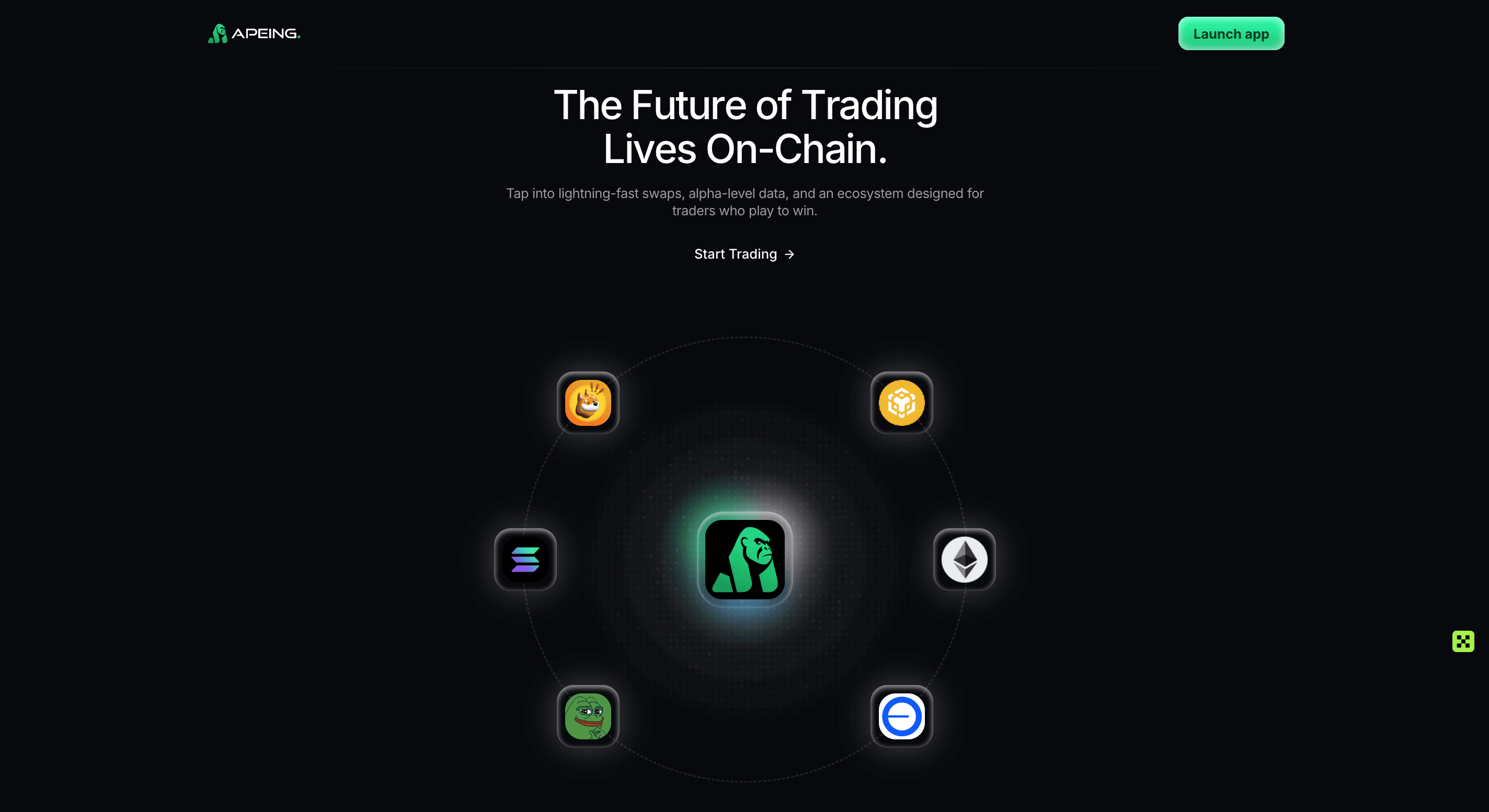
Apeing AI is a live Web3 trading platform designed to help users discover trending crypto tokens, analyze market activity, and execute trades through a streamlined, data-driven experience.
The project focused on simplifying complex trading interactions and translating dense blockchain data into interfaces that feel fast, readable, and action-oriented for active traders.
My role centered on designing core trading experiences, wallet interactions, and high-density dashboard systems while collaborating closely with engineering teams to ship a production-ready platform.
The Challenge
Web3 trading products often overwhelm users with fragmented information, technical interfaces, and cognitively heavy workflows. Trading environments can quickly become visually noisy, making it difficult for users to identify opportunities or act with confidence.
The challenge was to design an experience that could:
Simplify complex trading interactions
Organize large volumes of real-time market data
Improve speed and clarity of decision-making
Build trust within a fast-moving trading environment
Create scalable systems for future platform growth
Design Goal
Design a streamlined Web3 trading experience that makes token discovery, wallet interaction, and trading actions feel intuitive, fast, and understandable without sacrificing the depth required by active traders.
My Contributions
Designed core token discovery and trading flows
Structured UI systems for data-dense interfaces
Defined interaction patterns for trading actions and wallet experiences
Built scalable dashboard layouts and navigation structures
Collaborated closely with developers throughout implementation and launch
Powering Value, Access & Action
The wallet experience was designed as the operational core of the platform rather than a standalone crypto utility.
Instead of functioning as a passive storage tool, the wallet became an interaction layer that enables users to manage assets, unlock platform capabilities, and navigate the ecosystem with clarity and confidence.
The Wallet Experience Enables Users To:
Manage and move assets seamlessly
Access platform utilities and features instantly
Understand balances, ownership, and permissions clearly
Interact with trading workflows more efficiently
By positioning the wallet as part of the product experience itself, it became central to how users engage with the platform.
Rewards & Earn System
Turning Participation Into Progress
The Rewards & Earn experience was designed to encourage continuous engagement by transforming user activity into visible progression and platform value.
Rather than offering passive incentives, the system rewards participation, exploration, and consistent interaction.
The Rewards System Encourages Users To:
Explore platform features
Trade more consistently
Invite and onboard new users
Progress through structured reward levels
This created a stronger feedback loop between user activity and platform engagement.

The product was designed within real-world business and technical constraints, requiring a balance between speed, usability, scalability, and implementation feasibility.
The interface focused heavily on:
Information hierarchy
Fast interaction patterns
Reduced cognitive load
Clear transaction visibility
Responsive dashboard behavior
Special attention was given to helping users process complex trading information without overwhelming the experience.
Key Experience Areas
1. Data-Dense Interface Design
Trading environments naturally contain large volumes of information. The UI system was structured to prioritize readability, hierarchy, and fast scanning behavior across charts, tokens, balances, and trading actions.
2. Trading Interaction Flows
Interaction patterns were designed to reduce friction during high-intent actions such as:
Token exploration
Wallet interactions
Buy/sell actions
Transaction confirmation
Asset tracking
3. Web3 Usability
The experience aimed to make Web3 interactions feel less technical and more understandable through simplified flows, guided interactions, and clearer interface states.
4. Scalability
The design system was structured to support future expansion across:
Additional trading features
Reward mechanics
Wallet capabilities
Data visualization systems
Platform growth initiatives
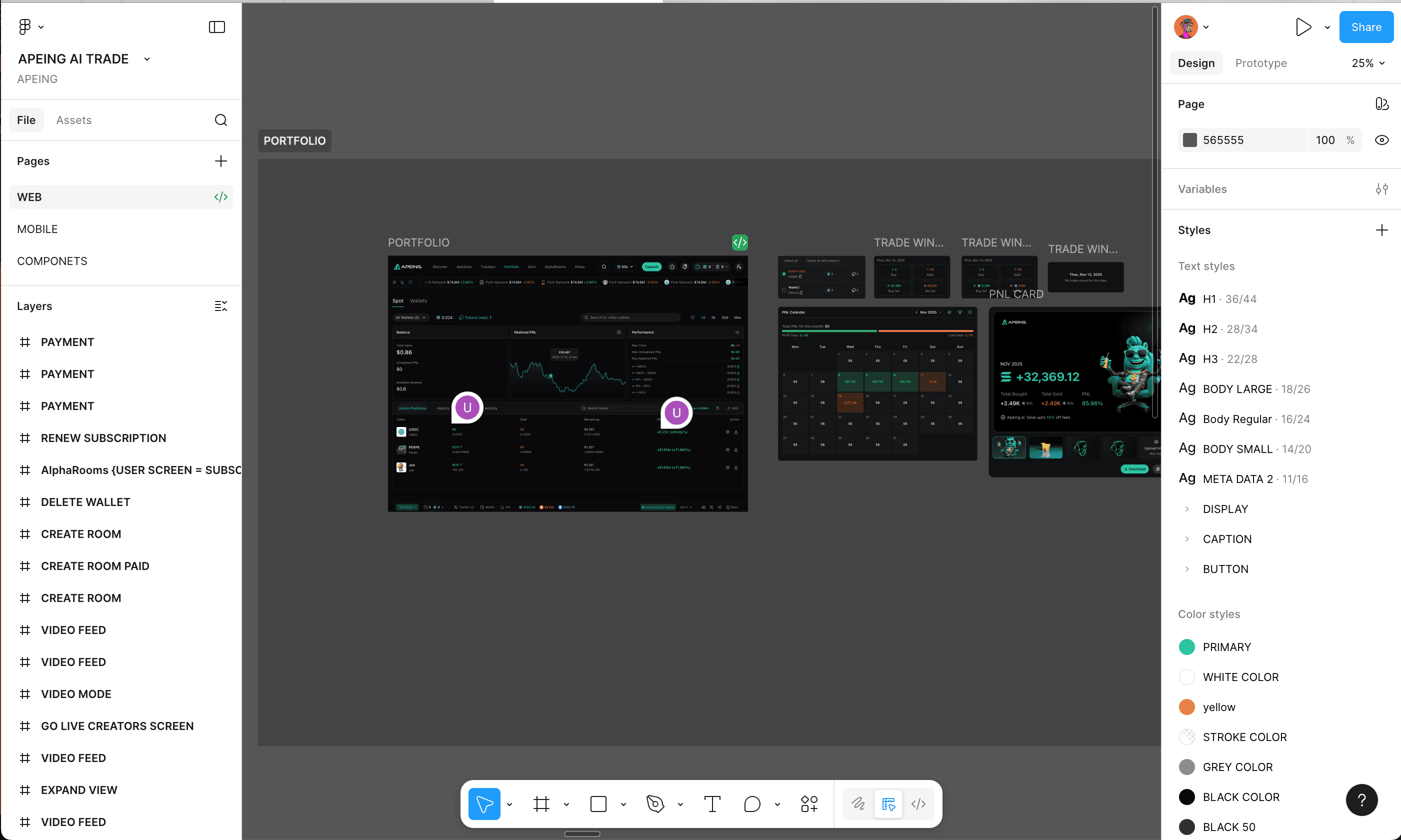
Successfully launched a live Web3 trading product
Designed experiences actively used in a production trading environment
Improved clarity across complex trading and wallet interactions
Created scalable systems for future platform expansion
Delivered a streamlined interface optimized for high-frequency interaction patterns
This project focused on simplifying the complexity of Web3 trading into a faster, clearer, and more actionable product experience. Beyond visual design, the work centered on helping users process information, navigate trading environments confidently, and interact with blockchain-based systems more intuitively.
Due to confidentiality constraints, this case study is presented as a high-level product overview.


